Fire Preparedness: A Complete Evacuation Plan
The True Cost of Inaction: How to Make a Fire Evacuation Plan for Any Household
Modern home fires burn faster than ever. Decades ago, you had about 17 minutes to escape a house fire. Today, due to synthetic materials in our furniture and open floor plans, you have as little as two to three minutes.
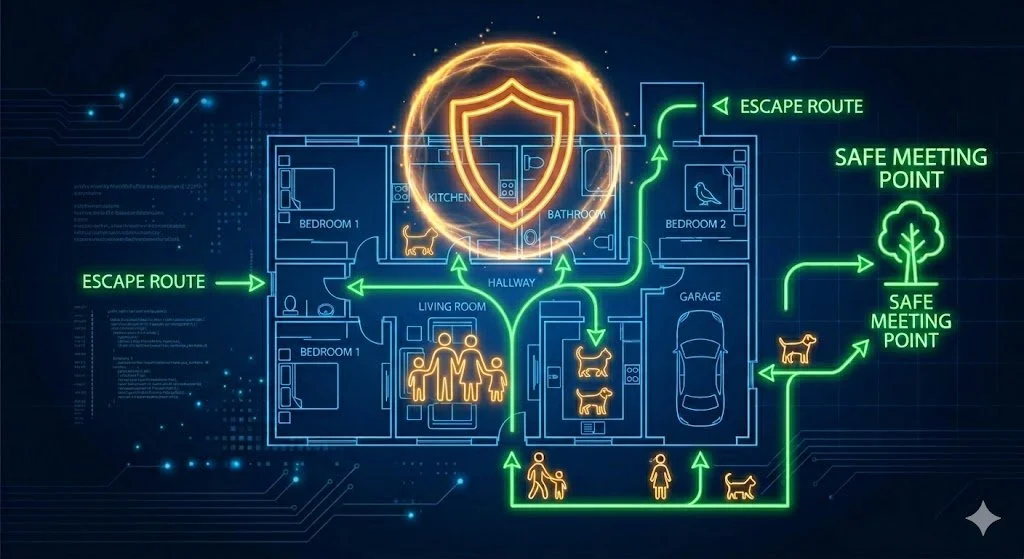
The cost of no plan is devastating. Without a practiced evacuation plan, those precious minutes are wasted scrambling for keys in the dark, searching for terrified pets, or panicking as toxic smoke fills the halls. In a disaster, you do not rise to the occasion; you default to your level of training. Disaster survival requires preparation right now.
Create a plan today
Here is how to make a fire evacuation plan, complete with a step-by-step fire safety checklist for different household sizes.
A Complete Evacuation Plan for a Family of Five and Pets
When a fire breaks out, you only have minutes to escape. For a family of five—plus a dog, a cat, and a bird—winging it simply isn't an option. Here is a step-by-step fire evacuation plan to keep everyone safe, whether they have two legs or four.
The Evacuation Plan
1.Know Your Exits: Map out two ways to escape from every room, especially the three kids' bedrooms.
2.Assign Roles: In an emergency, chaos is the enemy. Assign specific tasks. Parent A grabs the youngest child and clips the dog's leash. Parent B grabs the cat carrier, the travel birdcage, and ensures the two older kids are moving.
3.Get Low and Go: Teach the children to crawl under smoke. Practice this during bi-annual nighttime family fire drills.
4.The Meeting Spot: Pick a permanent meeting place, like a neighbor's driveway or a specific tree across the street. Once out with all family members, never go back inside.
5.The Family "Bug Out" Bag Stored right by your main exit, your emergency go-bag should be ready to grab instantly. Ours includes:
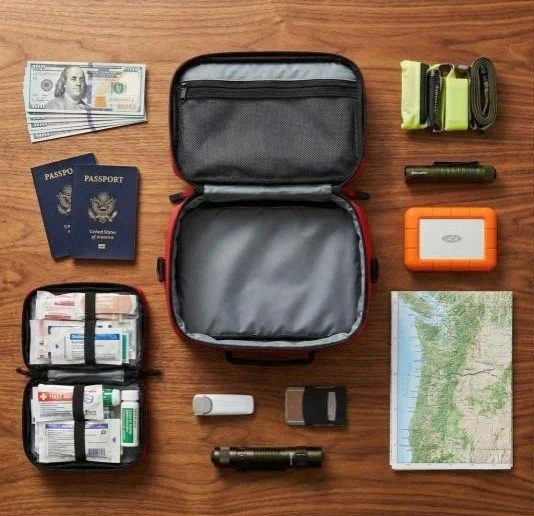
Important documents (copies of IDs, home insurance, and pet vet records) in a waterproof pouch.
Emergency cash in small bills.
A first-aid kit featuring burn gel and bandages.
Three days of non-perishable snacks and water pouches.
Flashlights, extra batteries, and a fully charged power bank.
A spare change of clothes for all three kids and both adults.
Pet essentials: collapsible bowls, a Ziplock of dog/cat food, birdseed, and an extra leash.
Practice your plan tonight. When the smoke alarm sounds, muscle memory is what will save your family!
Solo Emergency Preparedness: Survival for One
Living alone safety tips look different because you are your only alarm system and rescue team. Whether you are in a house or need apartment building fire safety tips, your solo plan must be airtight.
Step-by-Step Solo Strategy:
Upgrade Your Alarms: Invest in interconnected smoke alarms. If a fire starts in the basement, your bedroom alarm will sound instantly to wake you up.
Clear Your Runways: Keep your primary and secondary escape routes completely clear of clutter at all times.
Test the Door: If your bedroom door is hot to the touch, use your secondary exit (usually a window).
Designate an Off-Site Contact: Choose a family member or friend who knows your safety protocols. Call them the exact second you reach your meeting spot outside.
Equip Your Space: The best fire safety tools for apartments or solo living include a fire blanket in the kitchen and an escape ladder if you are on a second floor.
What to Pack in an Emergency Go Bag (Solo): Your emergency kit list should be streamlined, lightweight, and stored directly under your bed or by the door.
A high-decibel safety whistle to signal rescuers if you become trapped.
A personal first-aid kit with burn treatments and a three-day supply of daily medications.
N95 masks to protect your lungs from smoke while escaping.
A reliable flashlight and a pre-charged phone battery bank.
A weather-appropriate change of clothes and hard-soled, slip-on shoes.
A spare set of house and car keys.

.
Post-Evacuation: Ember Safe Means Peace of Mind
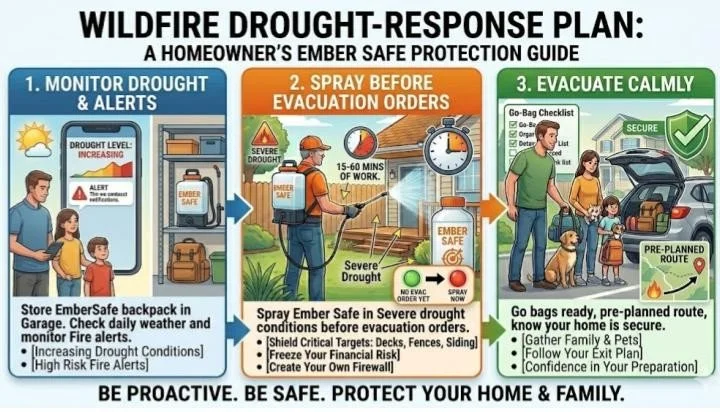
Once the mandatory evacuation order is made, your active role changes. The most important thing is to GET OUT NOW. Do not delay your departure to attempt to defend your home manually.
Instead, rely on the preparation you did months ago.
Grab the Go-Bag and Leave: Evacuate following your practiced evacuation plan.
Layered Defense Deployed: While your family is safe at the meeting point, the Ember Safe system fire retardant was sprayed before the evacuation orders around the perimeter to create a firebreak and activates exterior structure defense sprays, blocking wind-blown embers from igniting your home.
Your final step in how to make a fire evacuation plan is knowing that your family is safe because you left early, and your home is hardened because Ember Safe is standing guard.