Wilderness Urban Interface across America
The Urban Ember: Why Resilience Must Grow Faster than Our Cities
For decades, we’ve spoken about wildfires as if they were a distant, rural phenomenon—a "mountain problem" or a "Hillside problem." We built our homes with the comforting thought that city pavement and manicured lawns acted as an invisible shield. But as the headlines from April 2026 show, from the tropical subdivisions of Līhu'e, Kaua'i, to the growing suburban sprawl of Anchorage, Alaska, that shield has shattered.
The Wildland-Urban Interface (WUI) is no longer a specific map coordinate; it is an expanding reality. As our cities grow and the climate remains stubbornly dry, creating resilient spaces is no longer a luxury—it is the only way to safeguard our future.
The Myth of the "Safe" Neighborhood
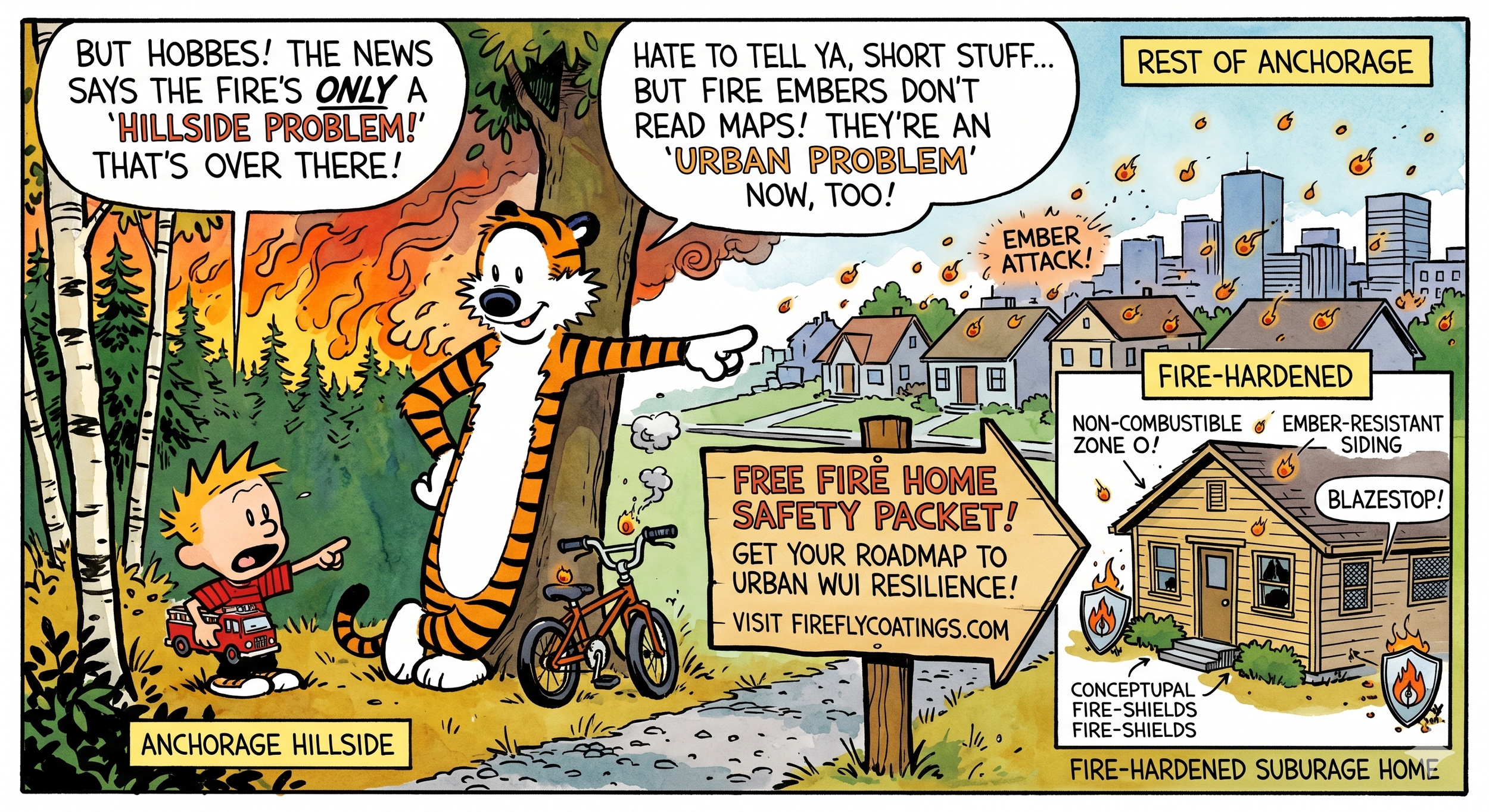
The recent shift in Anchorage highlights a dangerous misconception. As reported by Alaska’s News Source, wildfire is officially no longer just a "Hillside problem." When we expand our cities, we don't just add homes; we add "fuel" to an increasingly thirsty landscape. Urban forests, wooden fences, and even decorative mulch become a continuous path for fire to travel deep into the heart of town.
Scientific data confirms that 90% of homes lost to wildfire are ignited not by the main wall of fire, but by flying embers that can travel miles ahead of the front. This "Ember Attack" ignores city limits. A dry gutter in a dense subdivision is just as dangerous as a dead tree on a ridge.
When Cities Expand, Vulnerability Grows
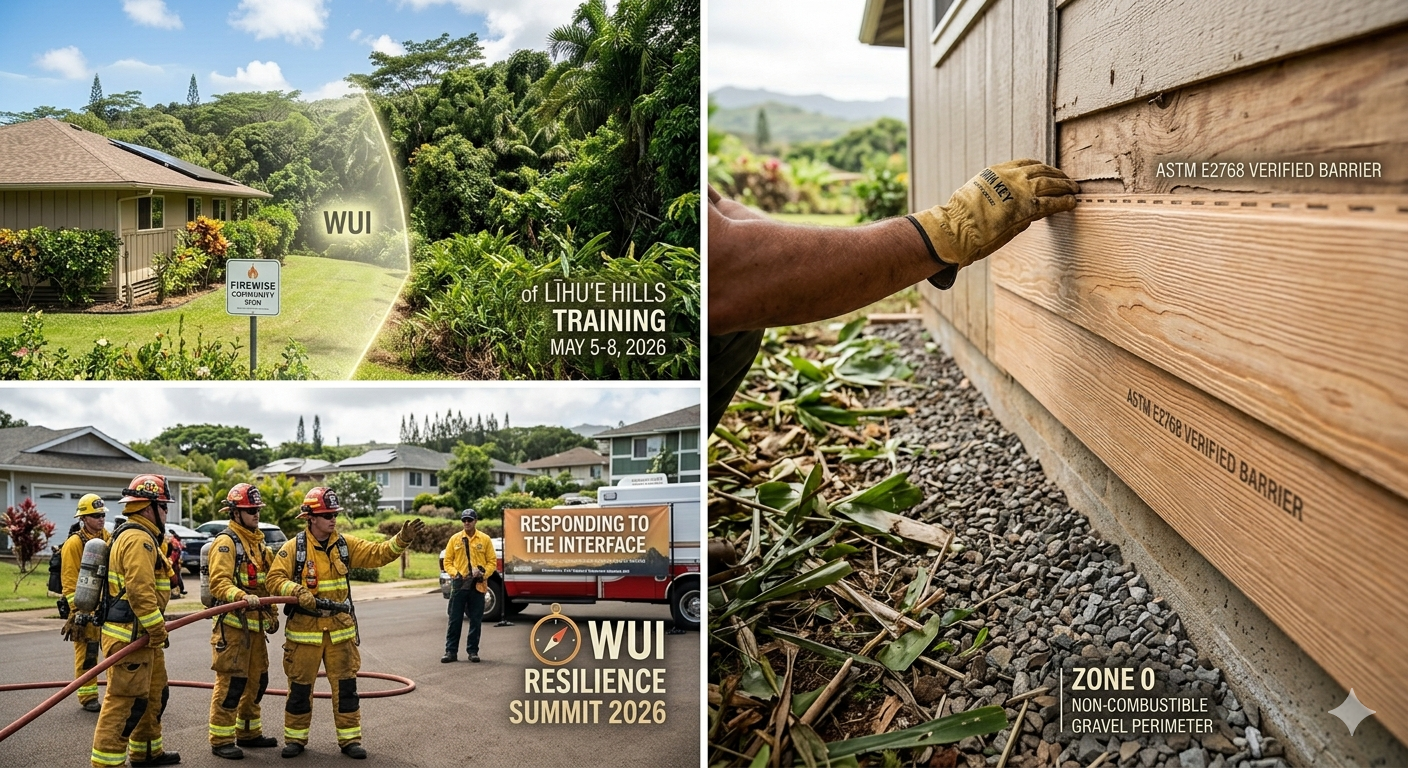
In Kaua'i, the Fire Department isn't just training in the deep woods; they are conducting "Responding to the Interface" drills in the middle of Līhu'e neighborhoods. They recognize that as development pushes further into natural spaces, the "Interface" becomes a high-stakes battlefield.
The 2026 global trends show that the WUI is the fastest-growing land use type in the United States. We are building in the very places where fire is a natural part of the ecosystem. This rapid urbanization, coupled with the "Nocturnal Intensification" of fires—where low nighttime humidity keeps fires burning 24/7—means our traditional firefighting methods are being stretched to the breaking point.
The Pivot: From Defense to Resilience
If we can't stop the expansion and we can't change the weather, we must change the environment. True resilience requires a "Defense-in-Depth" strategy that moves beyond just calling 911.
Passive Hardening is the New Standard: We must build with materials that don't need a firefighter to stand over them. Technologies like ASTM E2768 certified coatings (like BlazeStop) provide 30 minutes of critical flame-spread resistance. In a fast-moving urban fire, those 30 minutes are the difference between a standing home and a pile of ash.
Hardening "Zone Zero": The first five feet around a structure—your "Non-Combustible Zone"—is the most important real estate on your property. By replacing bark mulch with gravel and removing flammable shrubs, you break the path fire takes to your front door.
Community-Scale Action: As seen in the Kaua'i Wildfire Summit, resilience is a collective effort. When one neighbor hardens their home, it lowers the risk for the entire street.
Building for the Next Century
We are living through a period where everything is getting drier and the "nighttime reset" is disappearing. The news from Anchorage and Līhu'e is a siren song for the rest of the country: the fire isn't coming for the woods; it’s coming for the neighborhood.
By downloading resources like our Free Fire Protection Packet, you aren't just reading a checklist—you are participating in a global movement toward urban WUI resilience. We have the science and the technology to build spaces that can survive the new reality of fire. The question is no longer if the fire will come, but how ready your home will be when the embers arrive.
Take Control of Your Home’s Future. Download your roadmap to resilience today at fireflycoatings.com and move your property from "At Risk" to "Hardened."
#WUIResilience #UrbanWildfire #HomeHardening #ClimateAction #FireflyCoatings #SafetyFirst #AnchorageSafety #KauaiStrong #ScienceOfSafety