Wilderness Urban Interface: Growing
The Global Expansion of the Wildland-Urban Interface: Why This Science Matters for Our Future
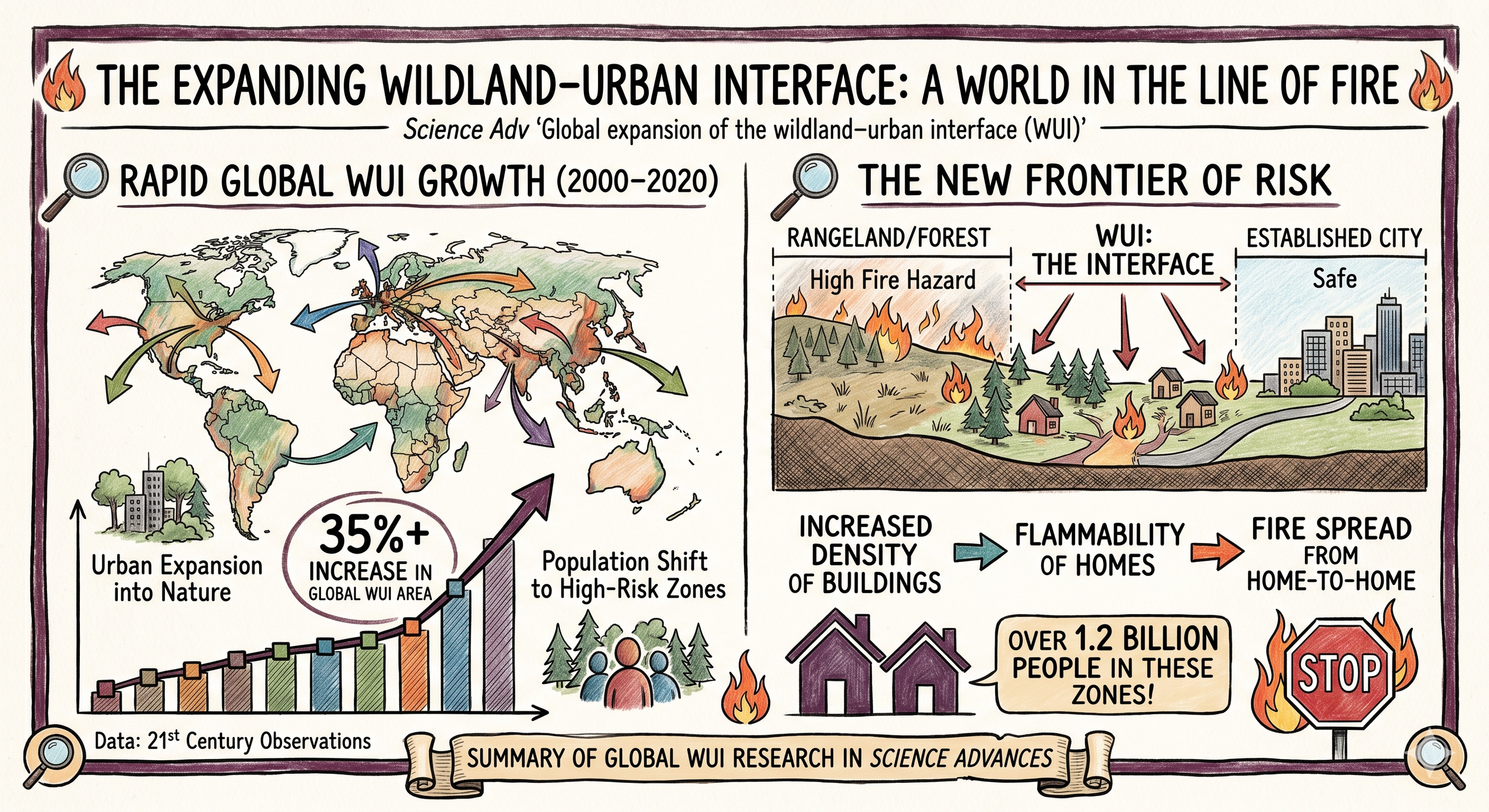
The boundary where human development meets the natural world is no longer a thin line on a map; it is a rapidly expanding frontier. This zone, known as the Wildland-Urban Interface (WUI), has become the primary theater for modern wildfire disasters. A recent landmark study published in Science Advances titled "Global expansion of the wildland-urban interface" provides a sobering look at how fast this "line of fire" is moving.
For those of us in the fire-hardening industry, this isn’t just data—it’s a roadmap for the survival of our communities.
The Scale of the Shift
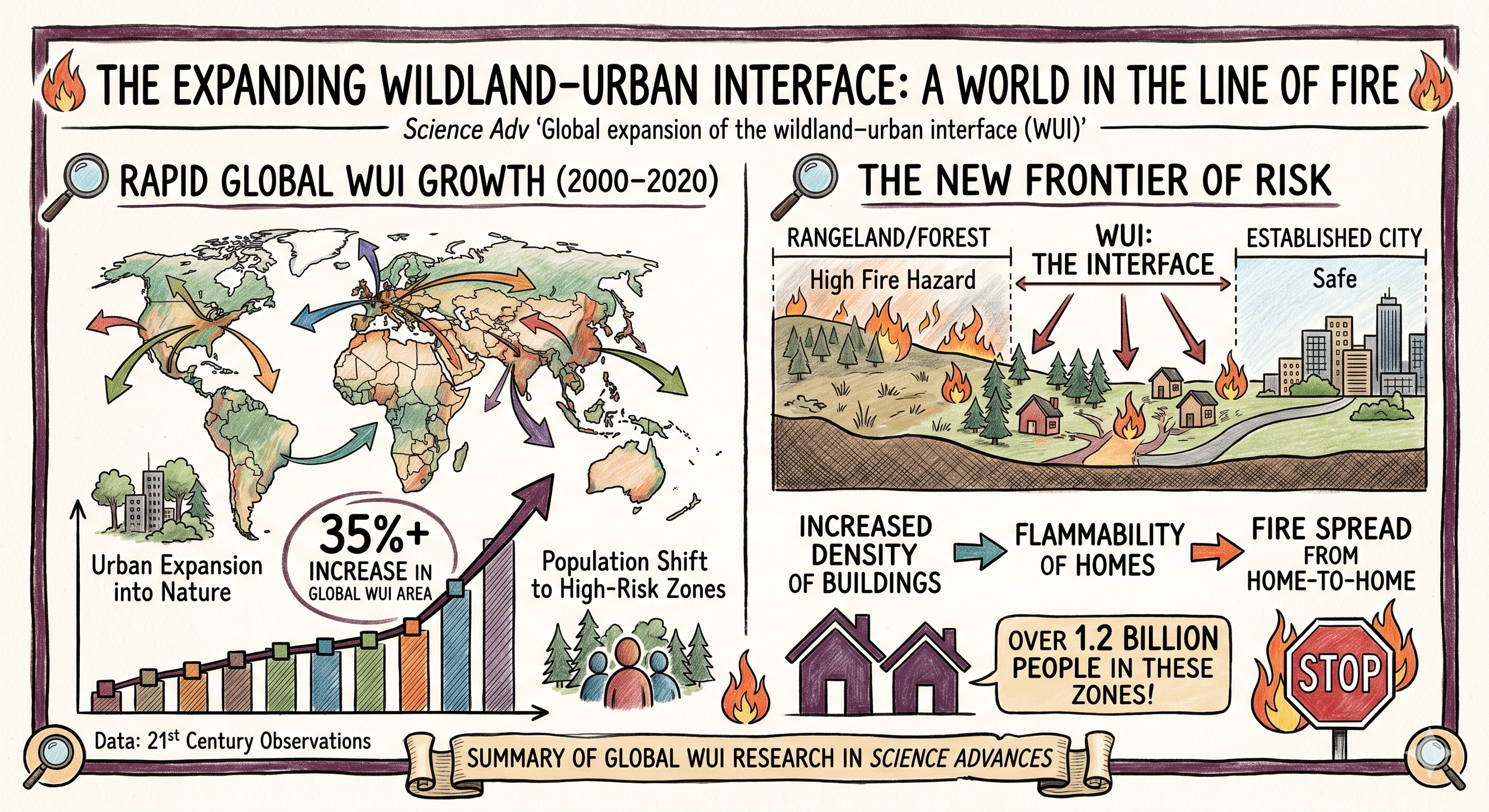
The study’s findings are staggering. Between 2000 and 2020, the global WUI area grew by 35%, adding over 187,000 square kilometers to the high-risk zone. Perhaps most critical is the human element: over 1.2 billion people now live in areas where homes and wildland fuels intermingle.
This growth isn't just happening in the American West; it’s a global phenomenon. However, for residents in Colorado, these findings hit particularly close to home. As our population shifts into the rangelands and foothills, we are increasing the "contact surface" between combustible human structures and fire-prone ecosystems. The science tells us that the risk isn't just about where the fire starts—it's about where the fire finds a fuel source. In the WUI, that fuel source is our homes.
Why This Science is Invaluable
This research is a game-changer for several reasons:
Redefining "The Problem": Historically, wildfire management focused on forest health and "putting the fire out." This study shifts the lens toward urbanization patterns. It proves that we cannot simply "thin" our way out of this crisis. If we continue to build combustible homes in expanding WUI zones, we are essentially building a larger fireplace.
Quantifying Flammability: The researchers highlight that the "density and flammability" of buildings are the primary levers for risk. This validates the push for stricter fire codes, like Colorado’s SB 23-166. By quantifying the growth of the WUI, the science provides the political and social leverage needed to mandate fire-resistant building materials.
The "Home-to-Home" Transmission Path: The study underscores that in dense WUI areas, fires often spread not from the forest to a house, but from house to house. Understanding this allows us to focus on "hardening" entire neighborhoods rather than isolated structures.
What Comes Next?
The Science Advances study has set the stage, but the work is far from over. Here is what the next phase of wildfire science and policy will likely focus on:
Micro-Scale Vulnerability Mapping: Future research will move from global satellite data to neighborhood-level modeling. This will help identify "convection corridors"—specific paths where wind and terrain conspire to funnel embers into the most vulnerable parts of a housing development.
The Insurance-Science Nexus: We expect to see closer collaboration between climate scientists and the insurance industry. As the WUI expands, insurers are fleeing high-risk zones. Scientific data like this will be used to create "Resiliency Scores," determining which homes are insurable based on their fire-hardening measures.
Material Innovation: If the problem is "building flammability," the solution is chemical and structural innovation. This is where products like HausShield Pro – BlazeStop come in. Science is moving toward intumescent coatings and ignition-resistant materials that can be applied to existing structures, bridging the gap between old-world building methods and new-world fire risks.
Hardening the Interface
At Firefly Coatings, we view this study as a call to action. We know that traditional siding often fails within 10 minutes of heat exposure. The science shows us that in the expanding WUI, we need to buy firefighters more time. Our BlazeStop system is ASTM-E2768 certified to provide 30 minutes of flame spread resistance—tripling the window of survival for a home in the line of fire.
The WUI will continue to grow as people seek the beauty of nature. The goal of modern science is not to stop people from living in these zones, but to teach us how to live in them safely.
Don’t wait for the map to change. If you live in a WUI zone, your home's flammability is the most important factor in its survival.
🔗 Read the full study here: Science Advances Research 🔗 Protect your home today: fireflycoatings.com 🎁 Download our FREE Fire Preparation Packet to audit your property’s risk: